I research. I design. I write.
Always with people at the centre.
Senior UX Researcher with 6+ years across telecom, enterprise software, e-commerce, and civic tech. I work across the full research stack — from ambiguous briefs to actionable insight decks — grounded in cognitive science and social research.
Where I've been. Where I'm headed.


Social sciences taught me to read context and power; cognitive science taught me how people actually perceive, decide, and err. That combination is the lens I bring to every research brief.
 Figma
Figma Miro
Miro Dovetail
 Qualtrics
 SPSS
SPSS Clarity
 Google Analytics
 Microsoft Office
 Google SuiteFigmaMiroDovetailQualtricsSPSSClarityGoogle AnalyticsMicrosoft OfficeGoogle Suite
The three questions I ask before anything else.
I don't compromise on: privacy, cultural nuance, and research that actually moves decisions.
Before any method, any tool, any session — I ask these. In this order. The answers change everything that follows.
I start by separating the question being asked from the question worth answering. A brief that says "why aren't users adopting this feature?" often hides something more interesting: "what does adoption actually cost someone in their daily workflow?" Getting that reframe right changes everything downstream — the methods, the participants, the insights, the outcome.
Method choice is driven by the type of uncertainty on the table. Quant tells me where and how much — qual tells me why and what to do about it. I mix them when the problem has both a scale question and a meaning question, which it usually does. The method follows the question. Never the other way around.
A finding that doesn't change a decision didn't do its job. I track research influence, not just research output. That means staying in the room after the readout — in roadmap sessions, design reviews, stakeholder conversations — because that's when research either lands or gets quietly set aside.
What organisations have said.
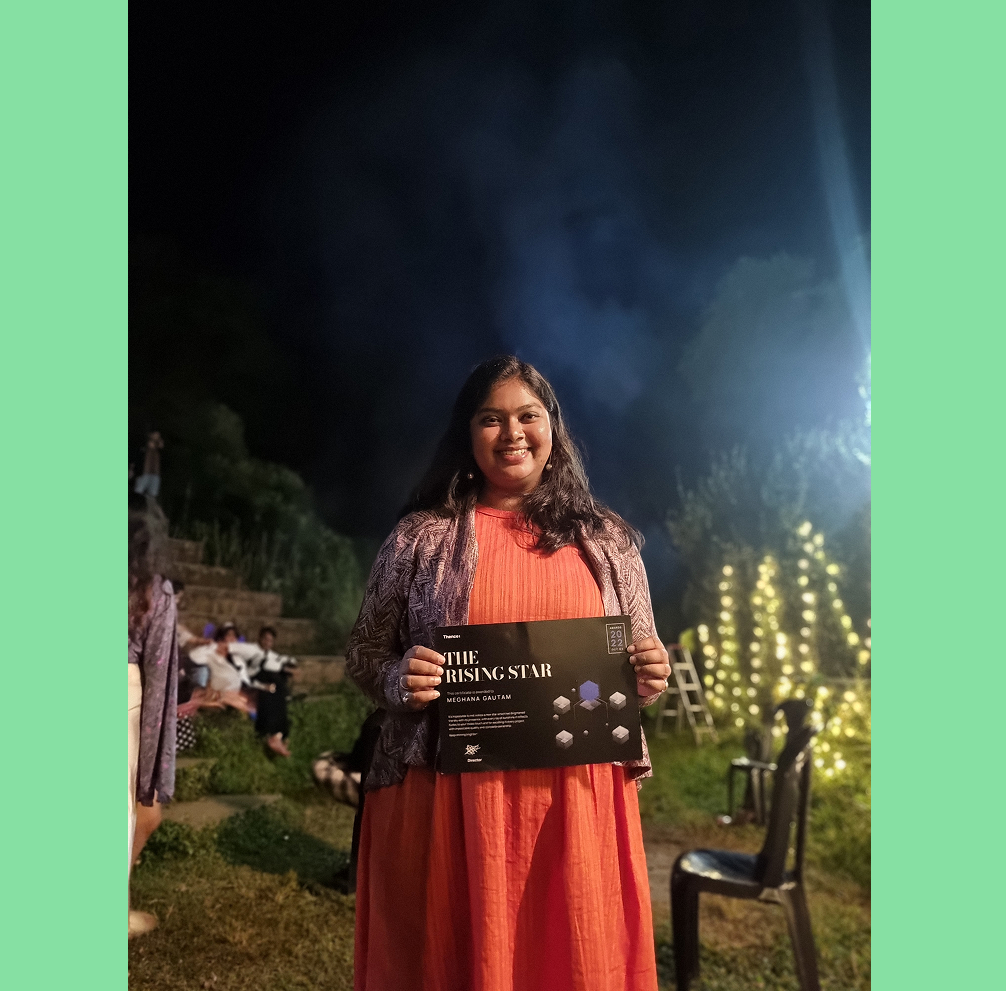
"Kudos to your midas touch and for excelling in every project with impeccable quality and complete ownership. Keep shining brighter!"
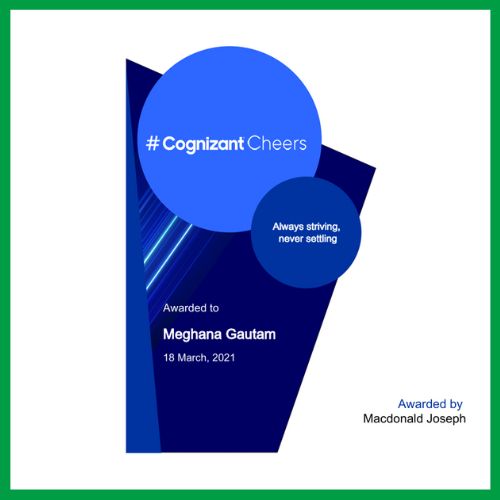
"Always striving, never settling."
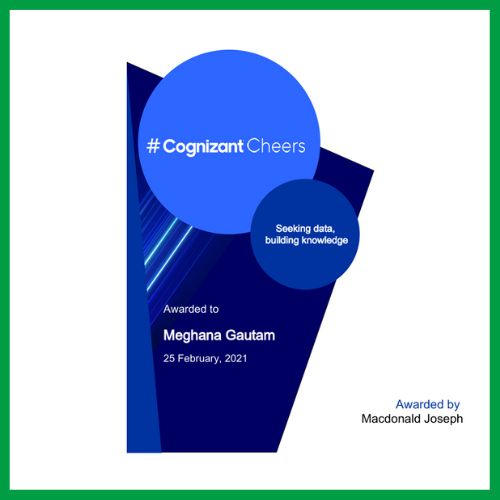
"Seeking data, building knowledge."
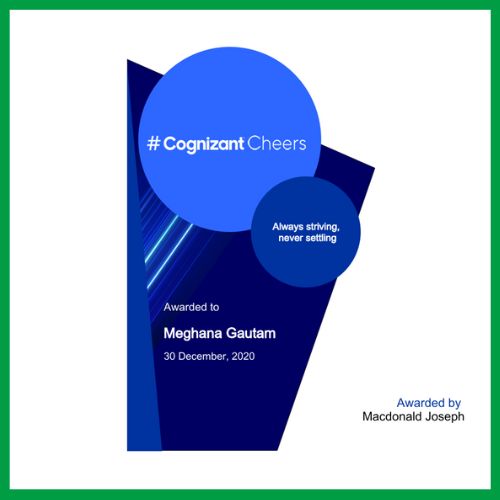
"Always striving, never settling."
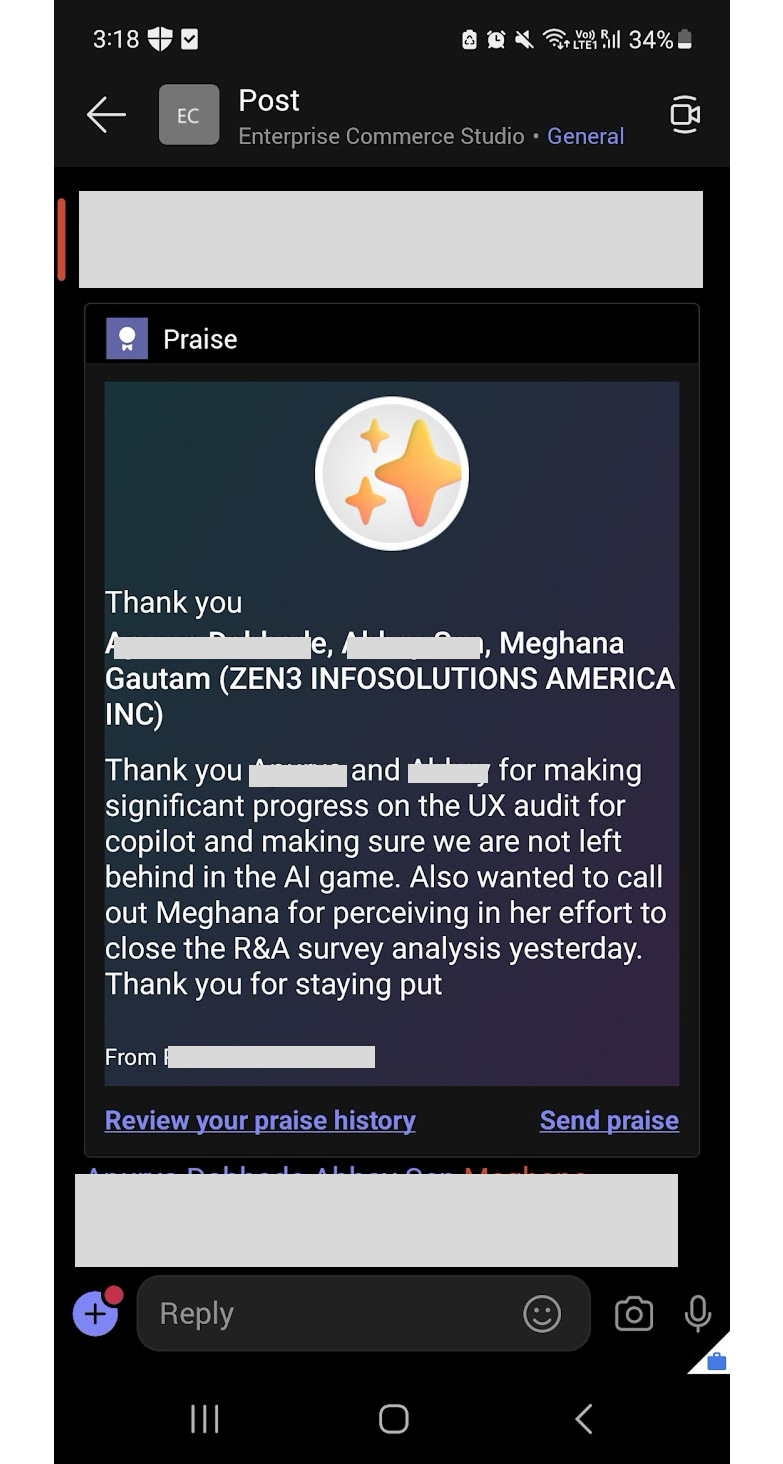
"Meghana for her effort to close the R&A survey analysis. Thank you for staying put."
Giving back.
Research is a practice, not just a job title. Here's how that shows up beyond paid work.